

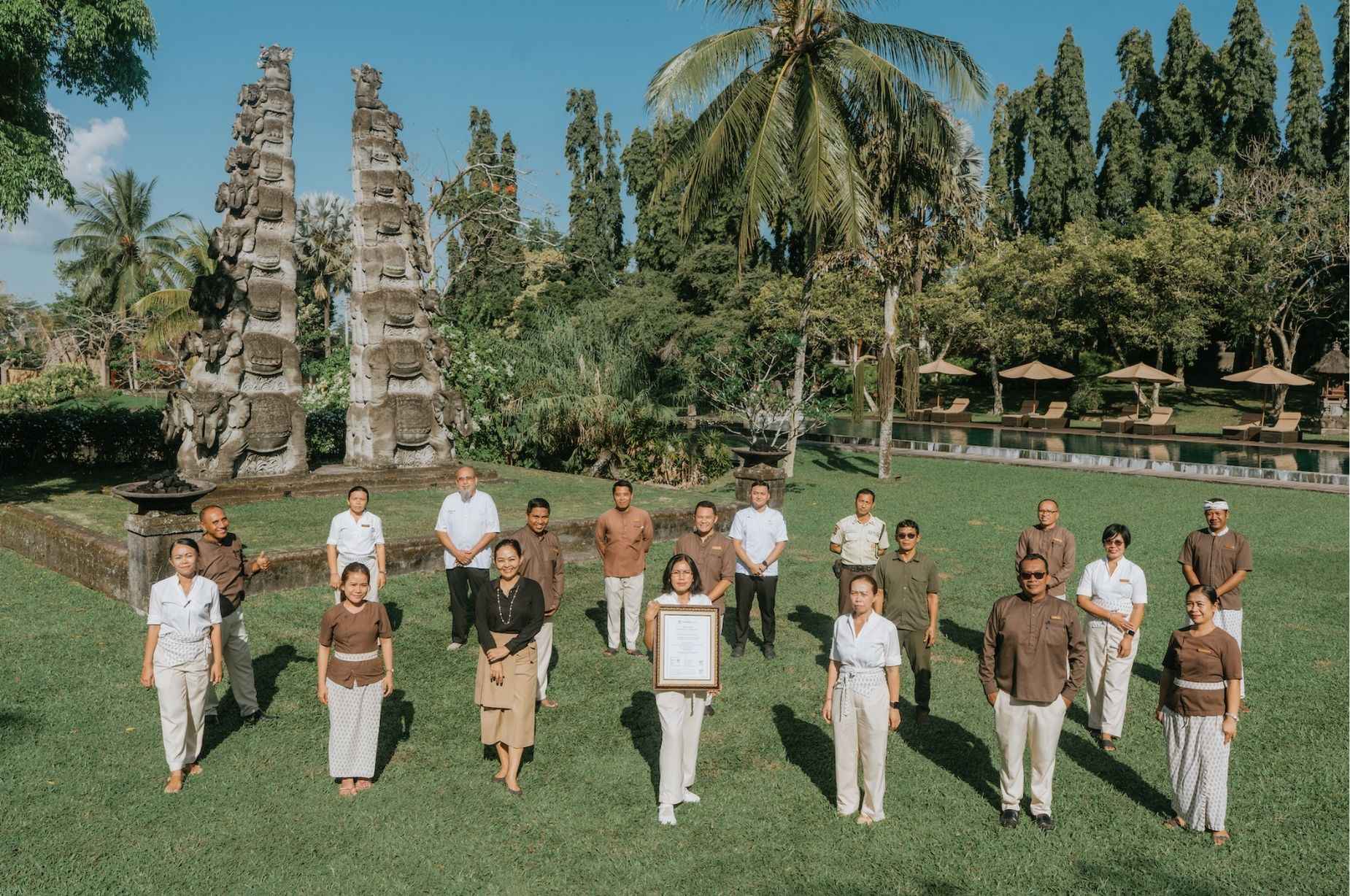
Tanah Gajah is now a GSTC-certified sustainable luxury resort in Ubud, Bali — independently verified. What it means for guests, and why it began in 1984.
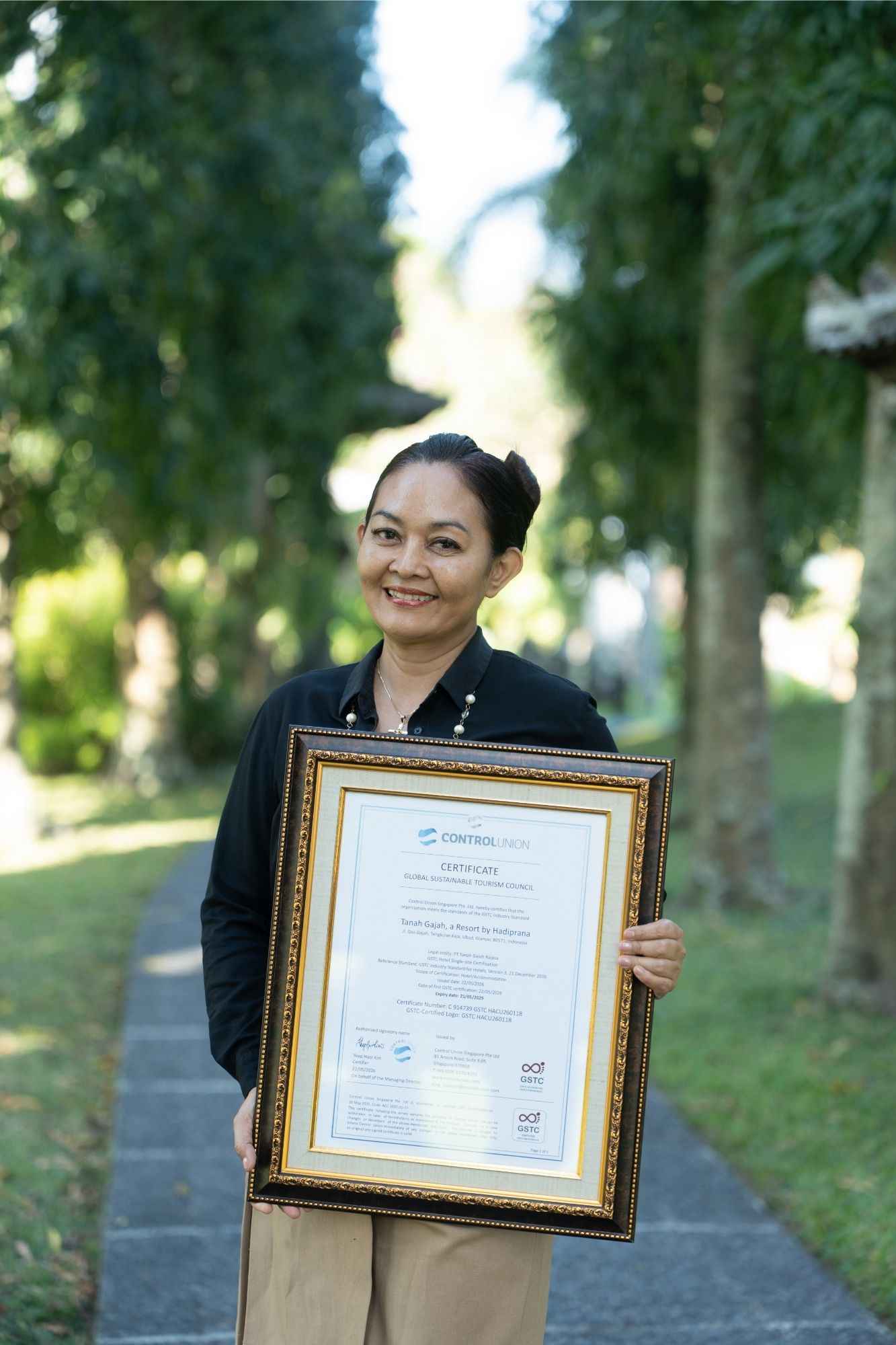
In June 2026, Tanah Gajah, a Resort by Hadiprana became a GSTC-certified resort — our sustainability practices independently audited by Control Union Singapore against the standards of the Global Sustainable Tourism Council. It is a milestone we are proud of. But the honest truth is that the story does not begin with a certificate. It begins in 1984, with a man who chose to build as little as possible.

The Global Sustainable Tourism Council (GSTC) manages the internationally recognised standards for sustainable travel. Unlike self-declared “eco” labels, GSTC certification cannot be bought or claimed: a hotel’s practices must be independently audited by an accredited certification body against criteria covering four areas — sustainable management, socioeconomic impact, cultural heritage, and the environment.
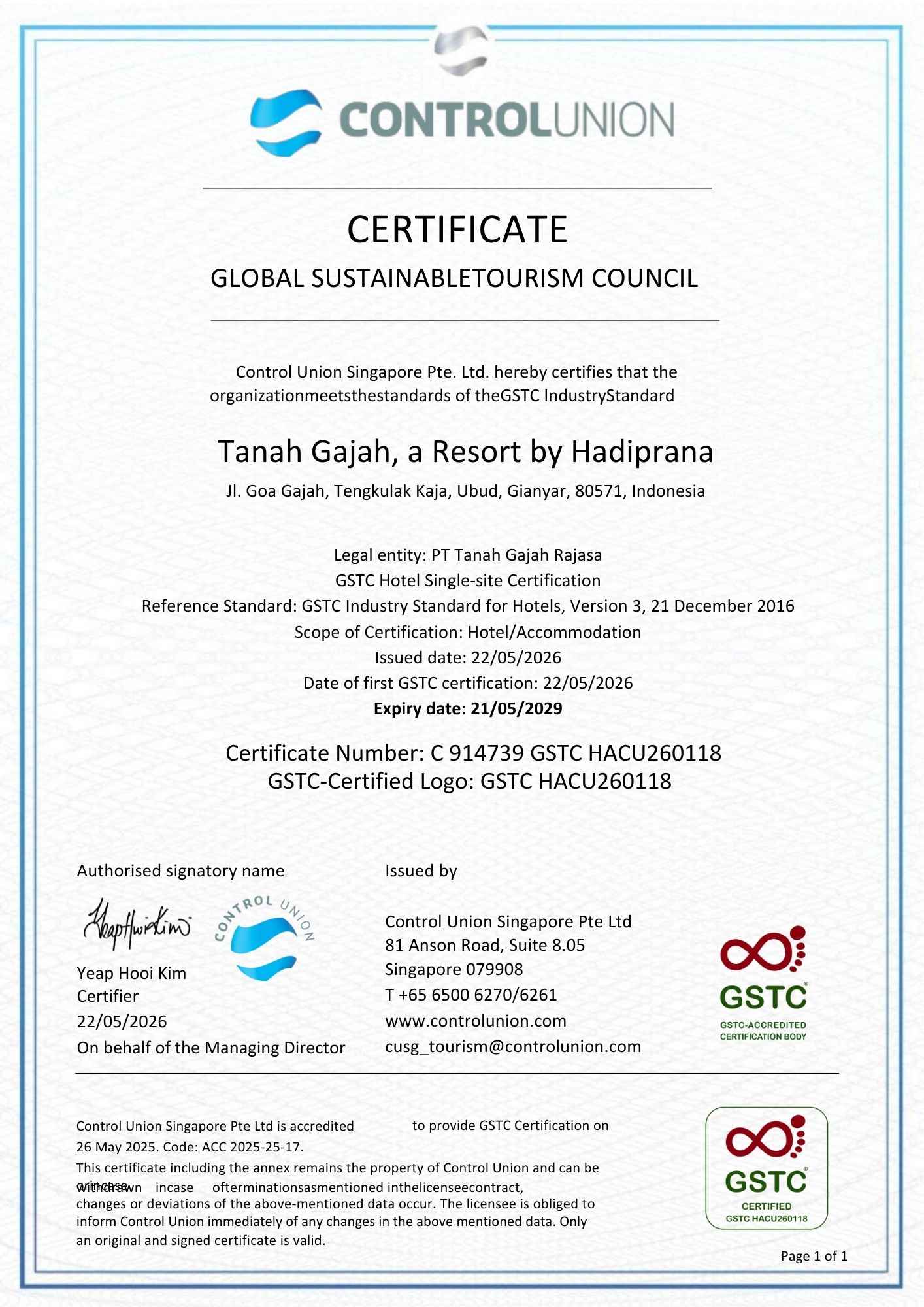
Tanah Gajah was audited by Control Union Singapore and certified in 2026 — certificate no. GSTC HACU260118, valid until 21 May 2029, with the resort re-examined to keep it.
“This didn’t start with a certificate. Much of what GSTC asks for, we were already living,” says Deasy Swandarini, our Chief Operating Officer. “What we really wanted was accountability. It’s easy for a hotel to say it’s responsible; we wanted an independent body to check our work, so our claims are valid. The deepest benefit is integrity — knowing our story holds up when someone checks.”
In an era when travellers are rightly sceptical of greenwashing, that distinction matters. Any resort can print a leaf on its brochure. Very few invite an auditor to walk their kitchens, examine their water use, and interview their staff.
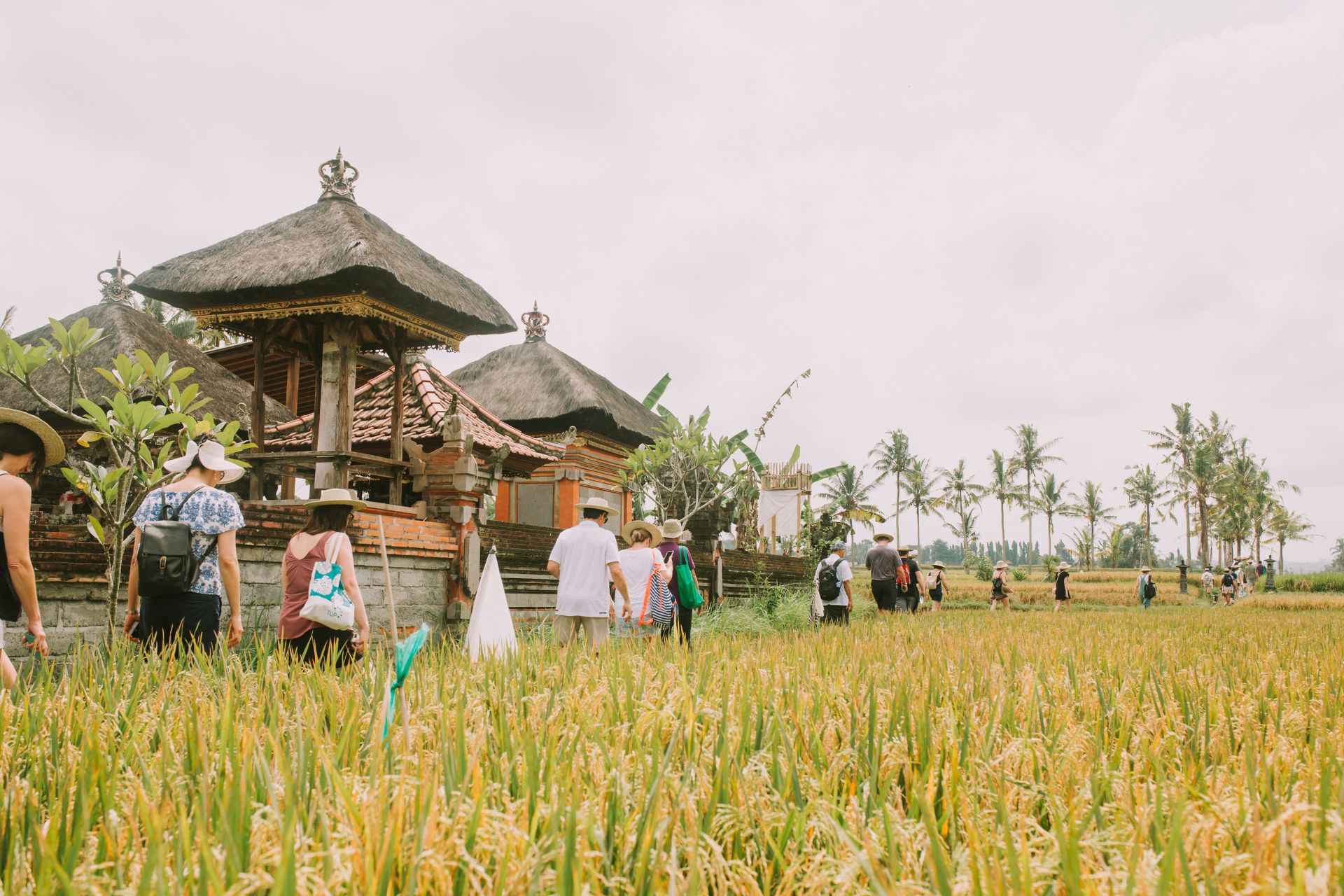
When the architect and art collector Hendra Hadiprana built this estate in 1984, he made a decision that would be called radical today: he dedicated the majority of his six hectares in Ubud to gardens, working rice paddies, and living nature — and built just enough to live among them. Four decades later, the resort still comprises only 24 suites and villas, and the rice paddies are still worked, still harvested, still home to the herons and songbirds that were here before we were.
That instinct — to give more to the land than you take — is what the certification formalises. As Puri Hadiprana, Director of Hadiprana Hospitality, puts it: “The Hadiprana family is blessed to bless others around us. This land was given to us. We hold it in trust.”

Our certification covers four pillars of responsible hospitality:
Environmental stewardship. Single-use plastics have been replaced with refillable amenities, glass water bottles, and plant-based alternatives — including straws made from rice-paddy remnants. Irrigation water is captured and reused. Waste is segregated and composted into the estate’s own gardens.
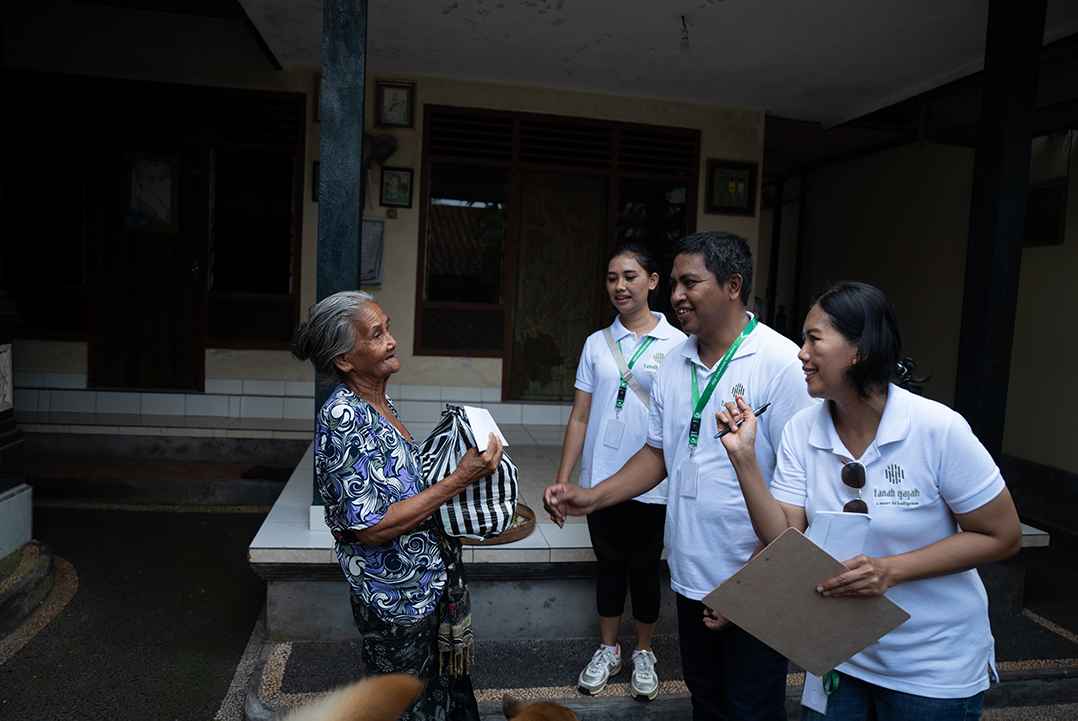
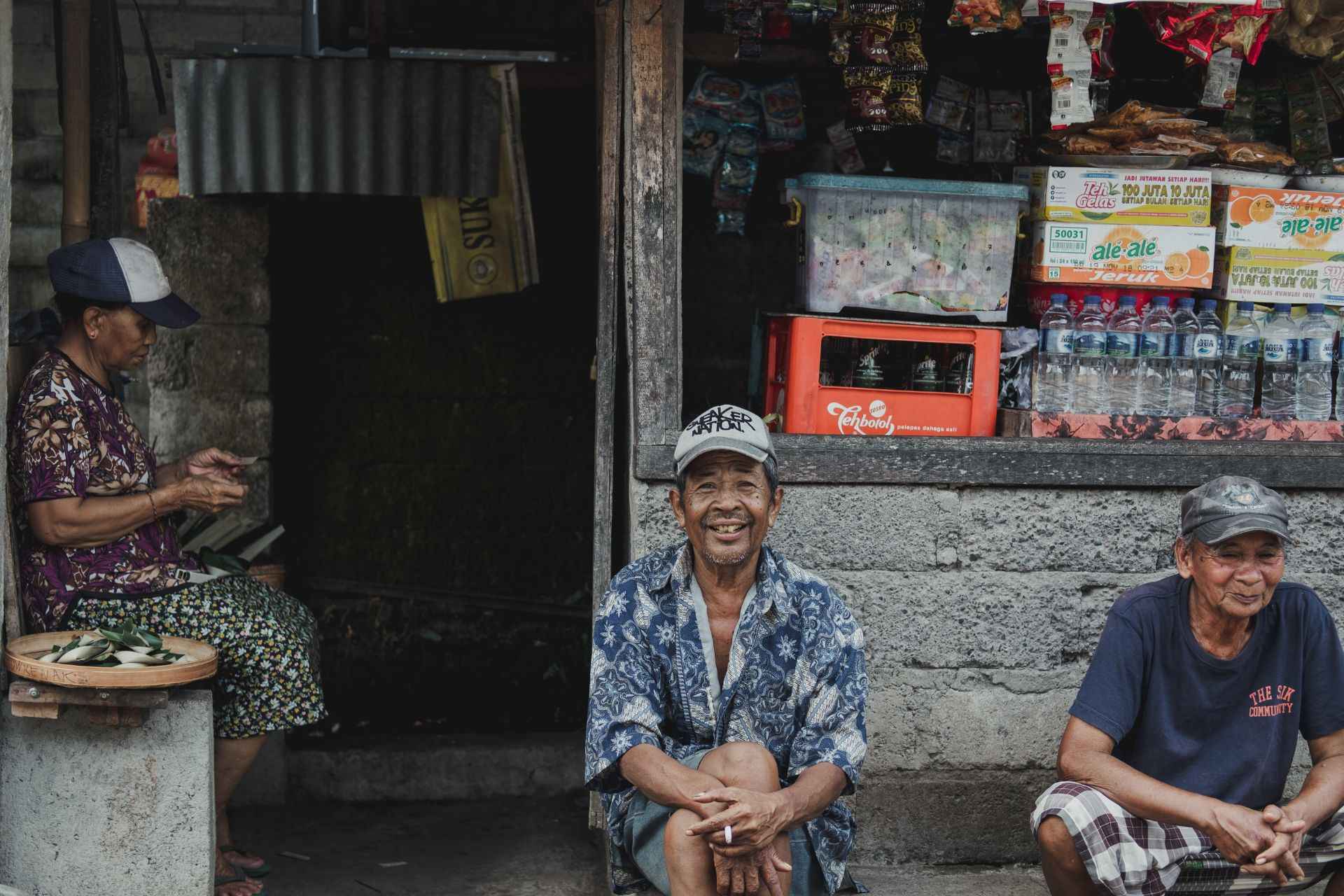
Social responsibility. Half of every rice harvest is shared with the farming families who tend the paddies alongside us. Each year we donate essential supplies to local schools and elderly neighbours, working directly with the village of Tengkulak Kaja. The sacred Kecak fire dance has a permanent home in our amphitheatre.
Economic empowerment. The Tempayan sources locally and seasonally, from farmers, fishermen, and artisans around Ubud — and as an independently owned resort, decisions made here stay here.
Health & safety. Ongoing staff training, comprehensive safety protocols, and a zero-tolerance policy toward discrimination, for guests and team alike.


Nothing about the certification asks you to compromise. The pool is still long and quiet, the villas are still filled with art, breakfast still overlooks the paddies. What changes is what your stay supports: a working landscape, a village economy, and a family’s forty-year promise to a piece of land — now checked, documented, and certified by an independent auditor.
“If you’re a boutique property, don’t see your size as a disadvantage,” Deasy says. “You can change a habit across your whole team in a week — something a 400-room hotel can only dream of.”
Sustainability at Tanah Gajah did not begin with this certification, and it will not end with it. It began in 1984, when Hendra Hadiprana chose to leave most of his land untouched. We simply asked someone to come and check.

Yes. Tanah Gajah, a Resort by Hadiprana in Ubud, Bali holds GSTC Hotel Certification — certificate no. C 914739 GSTC HACU260118, issued by GSTC-accredited certifier Control Union Singapore and valid until 21 May 2029.
The Global Sustainable Tourism Council (GSTC) sets the internationally recognised standards for sustainable tourism. Certification means a hotel’s practices have been independently audited against criteria covering sustainable management, socioeconomic impact, cultural heritage, and the environment.
It means a stay at Tanah Gajah is independently verified as responsible — from plastic-free amenities and water stewardship to rice-harvest sharing with local farming families in Tengkulak Kaja — without compromising the comfort of a five-star boutique resort of 24 suites and villas.
Through four pillars: environmental stewardship, social responsibility, economic empowerment, and health & safety — detailed above.






Jalan Goa Gajah, Tengkulak Kaja Ubud, Gianyar, Bali 80571, Indonesia
+62 361 975 685
info@tanahgajahubud.com


